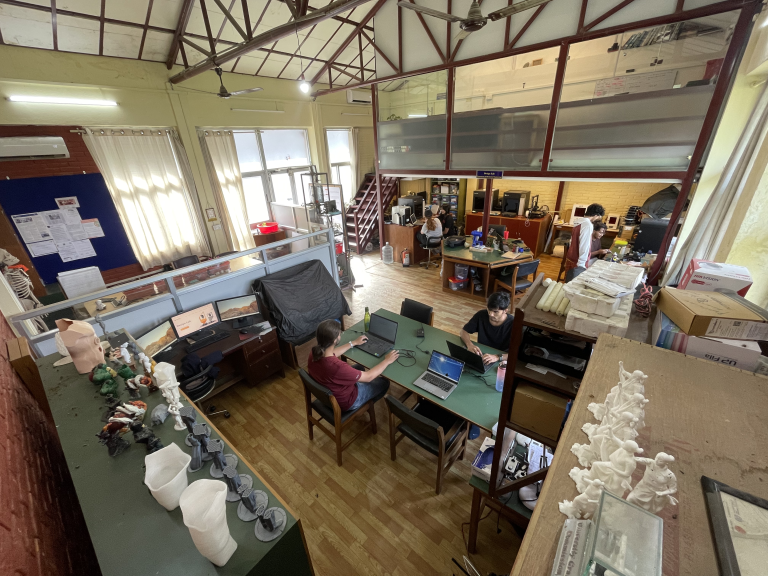
The Story of Jyāsah:
Establishing a Makerspace & Innovation Ecosystem at Kathmandu University
The Beginning of an idea(2013-2017)
After joining Kathmandu University as a lecturer in 2013, I often felt the need for a place where I, representing any curious individual, could break things without fear of being scolded, understand how they worked, and then try to make them. I believed that meaningful innovation could not happen without first understanding the technologies that already existed.
With that thought in mind, I began conceptualizing a space in 2014 where people could break and make things. The university had no shortage of obsolete machines and devices that could be taken apart and studied. The challenge, however, was finding a place to do it. Existing workshops and laboratories already had dedicated purposes and equipment, making them unsuitable for such activities. Shared office spaces were not an option either. As a result, the idea remained on hold while I became occupied with regular teaching and academic responsibilities.
A few years later, during my Assistant Professor interview in 2016, I was asked what I would do differently if appointed to the position. I shared my vision of creating a space where people could break things, learn from them, and build new ones. At that time, I had never heard the term makerspace, but the idea had already taken root in my mind.
After becoming an Assistant Professor in 2017, I drafted and submitted a two-page concept note proposing the establishment of the Kathmandu University Design & Innovation Studio (KUDOS) with the vision of “Learning through Innovation.” The idea was to create a well-equipped platform where students, faculty members, researchers, and other stakeholders could nurture their creativity and transform ideas into reality. It would be a space where academics, research, and innovation could coexist.
At its core, KUDOS was envisioned as a common space where anyone could break, understand, and make things without the fear of academic grades, evaluation, or pressure. It would also introduce users to modern prototyping technologies and encourage creativity through hands-on learning. While preparing the concept note, I came across terms such as makerspace, maker workshop, hackspace, and others used by renowned institutions around the world. For me, this was a validation of the idea. It confirmed that I was not alone; many individuals and institutions had already recognized the value of such spaces and successfully established them.
KUDOS aimed to promote reverse engineering, nurture creativity, and encourage learning through experimentation, including learning from failure. The long-term vision was to evolve the space into an Innovation Incubation Center where technologies and innovations could be nurtured, refined, and eventually made ready for the market.
From KUDOS to Design Lab (2018-2020)
In 2018, I received an email from the Registrar inviting me to discuss the concept. At that time, a 3D printer, probably the first in Nepal, already existed at Kathmandu University. He asked me to take charge of it and consider it the seed equipment for the lab I had envisioned. Unfortunately, he moved on from his position, and the formal discussions with the university administration came to a halt once again.
However, his moving on unexpectedly opened another opportunity. I remained in close contact with him and had the chance to work with him directly. He not only encouraged the development of the concept but also showed me practical ways to turn it into reality.
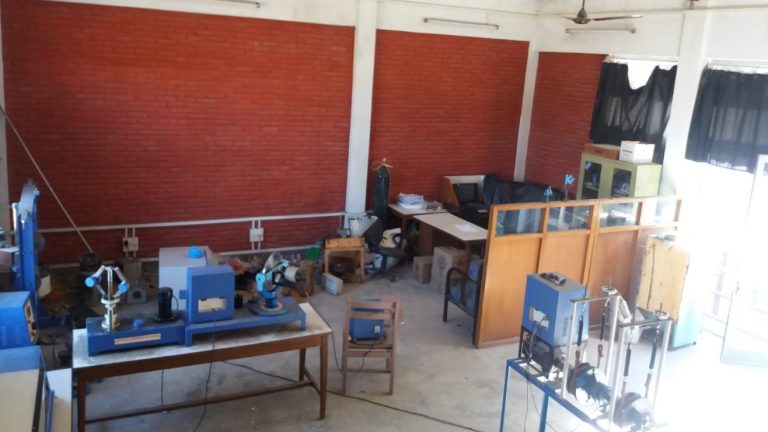
By then, I had moved out of my assigned “office” space and into a largely abandoned room filled with pigeon droppings and signs of rodent infestation. It was far from ideal, but it offered something I had been looking for all along, space. I relocated the industrial 3D printer, weighing nearly 200 kilograms, from TTL to this room and began setting up what would eventually become the foundation of the lab.
During this period, much of my time outside teaching was spent experimenting with 3D printing. We printed simple objects such as bookshelf brackets, small turbines, power socket covers, and other everyday items. We also began collecting discarded printers. Together with a group of enthusiastic students, we dismantled them using little more than a screwdriver and a hammer, learning from every component we uncovered.
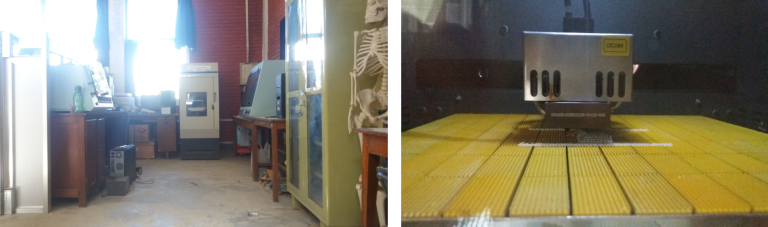
In 2019, with support from the department, we acquired four filament-based 3D printers and officially named the space the Design Lab. The name was changed from KUDOS to Design Lab to make the scope broader and more inclusive.
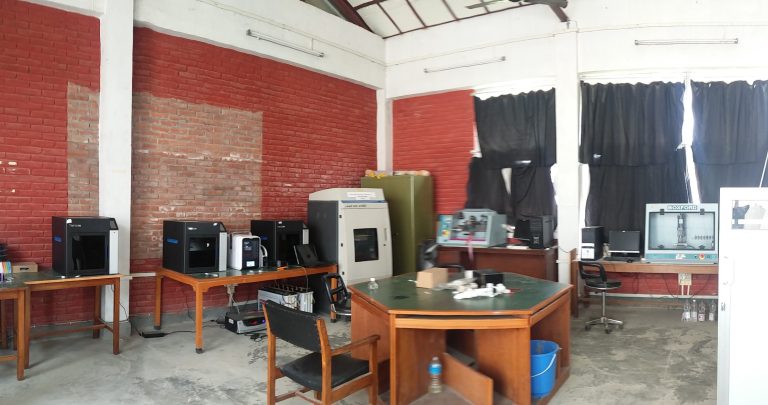
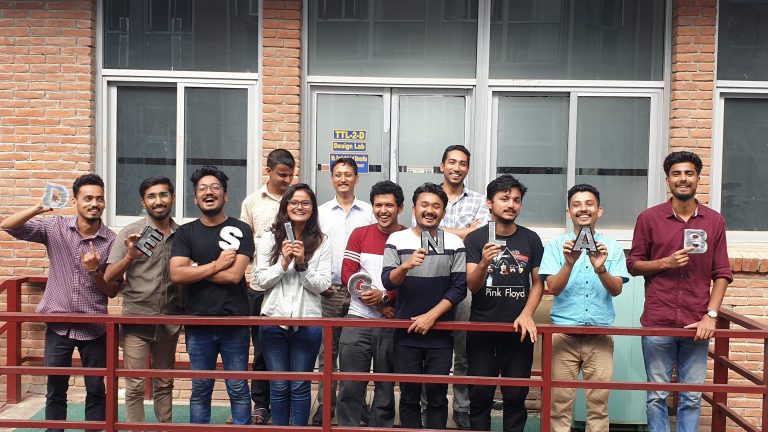
In 2019, the Design Lab secured its first funded research project and recruited its first research assistants. Since then, the lab has worked on numerous projects funded by both national and international organizations while supporting undergraduate projects, graduate research, theses, and dissertations. Additional support from organizations such as the University Grants Commission (UGC), Energize Nepal, and the Department of Mechanical Engineering helped strengthen the lab’s capabilities through the acquisition of a resin printer, powder-based printer, desktop 5-axis CNC machine, 3D scanner, and other equipment.
The Birth of Jyāsah (2021-2022)
As the Design Lab grew and its collection of digital manufacturing tools expanded, we began broadening our activities beyond research. The lab increasingly served as a place where students and other stakeholders could transform ideas into physical prototypes through rapid prototyping technologies. Over time, however, much of the available space became occupied by equipment. The area available for makers and collaborative activities became increasingly limited, highlighting the need for a larger space with larger machines and greater flexibility.
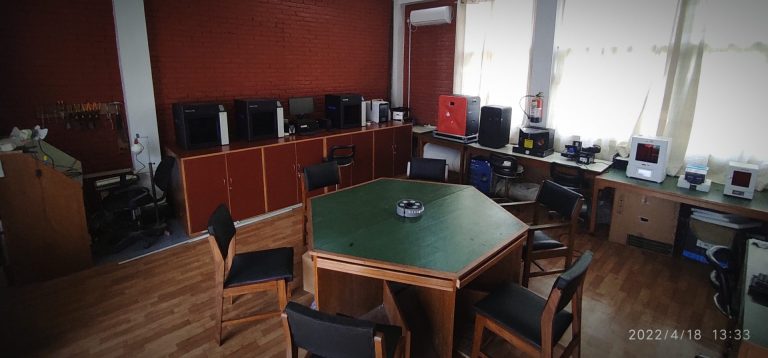
This led to discussions in 2021 about establishing a dedicated makerspace. In collaboration with the School of Arts, a joint proposal was submitted to Kathmandu University in 2022.The new space was named Jyāsah: A KU Makerspace, carrying forward the original vision that began with KUDOS and continued through the Design Lab. The aim was to promote a culture of passion-based learning, creativity, innovation, and entrepreneurship in Nepal.
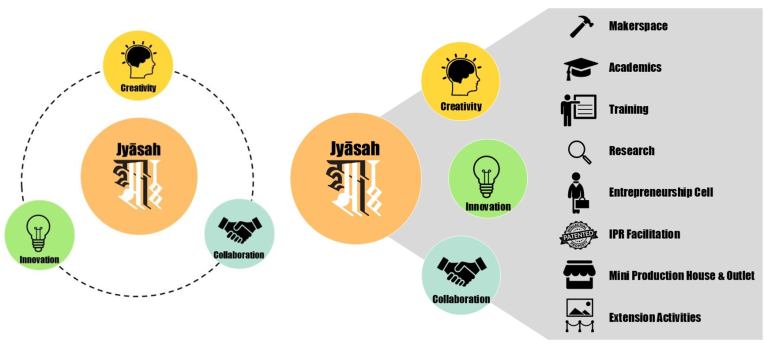
The term Jyāsah is derived from two Nepal Bhasa (Newari) words: Jyā, meaning work, and Sah, meaning space. Together, they describe a workplace, workspace, or workshop.Jyāsah stands on three pillars: creativity, innovation, and entrepreneurship. Its vision extends beyond the conventional idea of a makerspace or innovation center to include academic activities, training programs, research, an entrepreneurship cell, intellectual property facilitation, a mini production house, an outlet, and community extension activities.
A Work in Progress
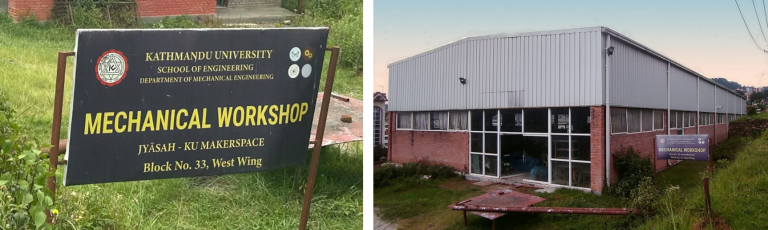
Today, Jyāsah operates in its most basic form within a 15 m × 50 m space located in the southwestern part of Kathmandu University. Although it took nearly a decade for the original idea to materialize, the makerspace remains a work in progress. Over the years, it has gradually developed basic maker facilities including workbenches, drilling and welding stations, an induction furnace with foundry setup, a smithy section, and a plasma cutter. These facilities have enabled students and researchers to move beyond design and experience the process of making firsthand.
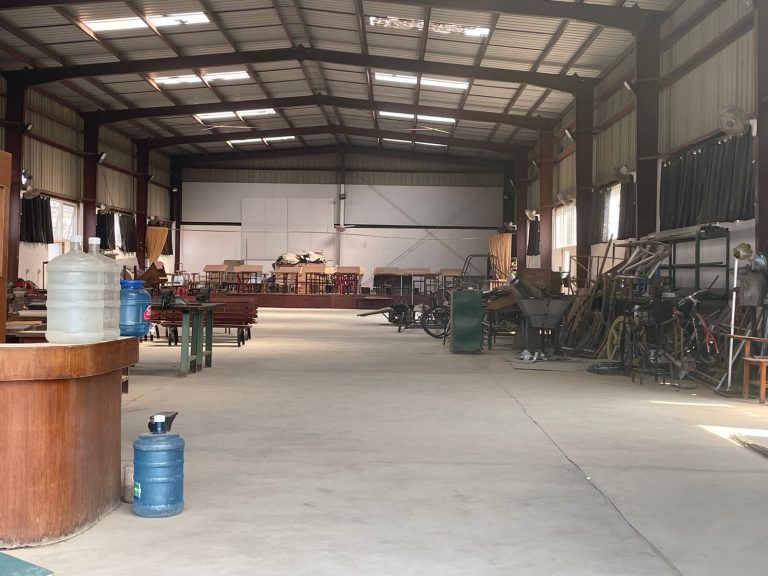
However, many of the capabilities required for a fully functional makerspace are still absent. Large-scale additive manufacturing systems, laser and waterjet cutting facilities, plastic processing equipment such as injection molding and blow molding machines, electronics prototyping stations, and other fabrication tools are yet to be established. More importantly, a makerspace cannot thrive on equipment alone. Sustained funding, a dedicated operation and maintenance team, and enthusiastic caretakers who can nurture the maker culture are equally essential.
Perhaps the most rewarding outcome of the Design Lab journey has been seeing student researchers evolve into innovators and entrepreneurs. Over the years, several students who worked, experimented, and learned within the lab have gone on to establish their own ventures. Companies such as Nyanocare Pvt. Ltd., Neplafil Pvt. Ltd., and Regen Nepal Pvt. Ltd. stand as examples of how hands-on learning and a culture of making can translate into meaningful enterprises. These ventures, operating in areas ranging from healthcare technologies to sustainable manufacturing, reflect the original vision behind KUDOS and Jyāsah: creating a space where ideas are not only explored and prototyped but can eventually grow into solutions that serve society.

While infrastructure and equipment remain important, these stories demonstrate that the true value of a makerspace lies in the people it nurtures and the confidence it gives them to turn curiosity into innovation and innovation into impact.
The establishment of Jyāsah demonstrates that the idea is both relevant and achievable. The next challenge lies in transforming it from a basic facility into a vibrant innovation ecosystem that can support creativity, innovation, and entrepreneurship at a much larger scale. With the recent establishment of the Ministry of Science, Technology and Innovation, there may now be an opportunity to invest in such initiatives and create a nationally significant makerspace that serves not only Kathmandu University but also Nepal’s broader innovation community.
Despite its limitations, Jyāsah represents the realization of an idea that began with a simple belief: innovation starts when people are given the freedom to explore, experiment, break things, learn, and create.