Study of Local Production of Locking Prosthetic Liners in Nepal
Funded by Global Disability Innovation Hub, UK
(2025-2026)
This project is a dedicated study into the performance of locking prosthetic liners produced locally in Nepal by Operation Namaste. The primary objective is to analyze the common failure and damage mechanisms observed in the existing liners. By identifying these issues, the research aims to develop and propose a sustainable repair strategy. This work is crucial for improving the longevity, reliability, and overall quality of prosthetic liners, thereby enhancing the mobility and quality of life for individuals with limb loss in Nepal.
Project Objectives
Identify and document common wear and failure patterns in used silicone prosthetic liners.
Develop and evaluate affordable liner repair techniques using Sil-Poxy adhesive.
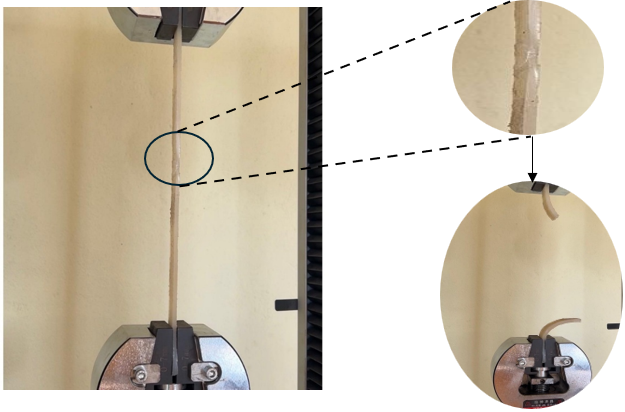
Assess the mechanical performance of repaired liners through tensile and peel testing.
Determine whether repaired liners can provide a safe and cost-effective alternative to immediate replacement in low-resource settings.
Figure 1: Preliminary Testing Results of Liners
Key Findings
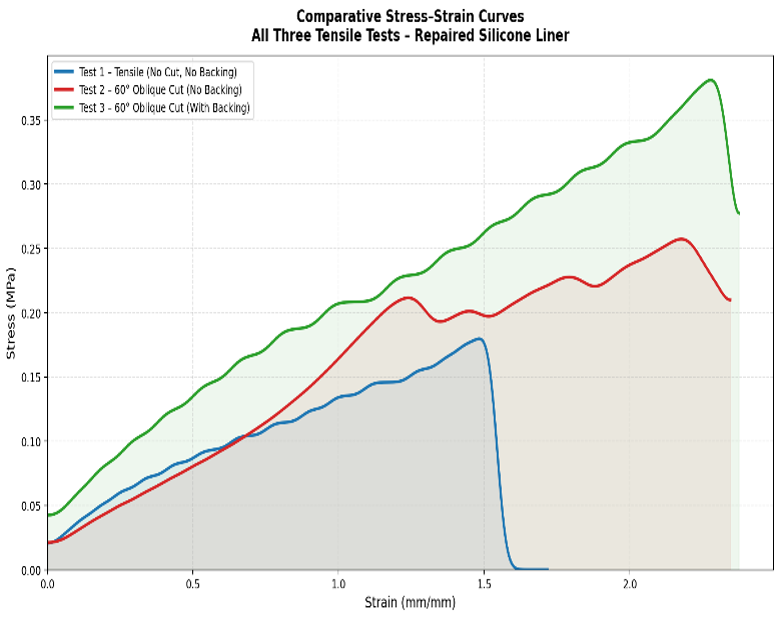
The study found that distal-end damage was the most common failure mode, occurring in all inspected liners. Mechanical testing demonstrated that repairs using an oblique cut combined with backing fabric reinforcement achieved the best performance, showing approximately 52% higher tensile strength than comparable repairs without reinforcement. Peel tests also showed that repaired tapered sections achieved significantly stronger adhesive bonds. These results suggest that appropriately repaired silicone liners can provide a practical, affordable solution for extending liner lifespan in low-resource environments.
Figure 1: Tensile Testing of Liners
Figure 2: Preliminary Testing Results of Liners
Figure 3: Stress vs Strain Comparison
Project Team
Dr. Pratisthit Lal Shrestha, Principal Investigator
Dr. Surendra Sujakhu , Collaborator and Material-Science Advisor