2-D / 3-D Camera Based Custom Insoles for Diabetic Foot Care Utilizing Advanced Image ProcessingTechniques
Funded by University Grants Commission (UGC), Nepal
(2025-2027)
This project is dedicated to the development of an innovative, camera based system designed to produce personalized insoles for diabetic foot care. By using advanced image processing techniques, the system accurately converts a standard 2D photograph of a foot into a precise 3D model.
This model then serves as the basis for designing and fabricating custom insoles that aim to improve patient comfort, redistribute plantar pressure, and mitigate the risk of complications such as foot ulcers.
Project Objectives
To develop a product that can generate customized insoles for diabetic patients from the comfort of their homes, using a limited number of smartphone-captured photographs.
To evaluate the performance of different image processing techniques for depth estimation and landmark identification on plantar foot images, in order to select the most reliable approach for insole generation.
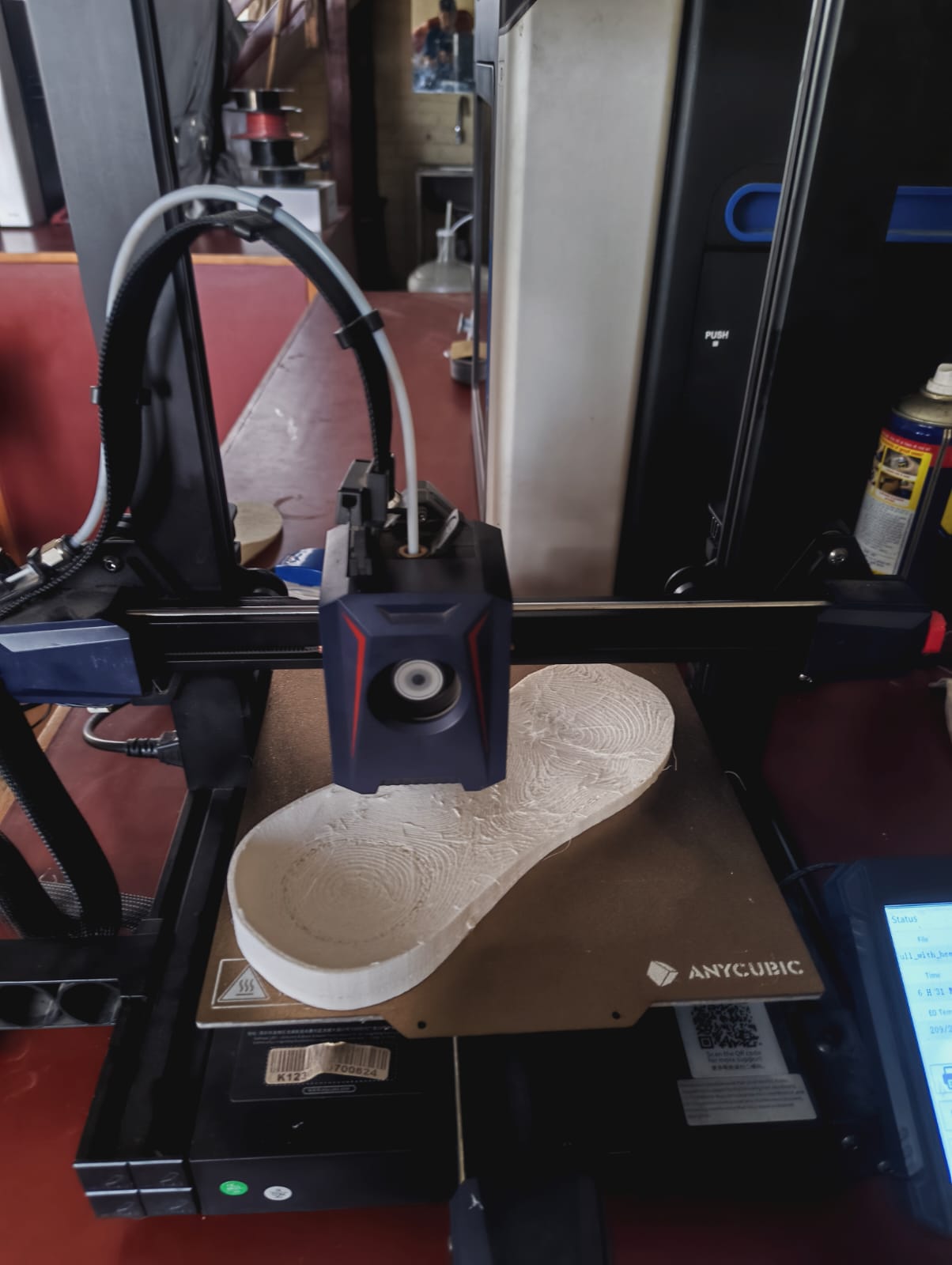
To translate the extracted foot geometry into a parametric, 3D-printable insole design suited to diabetic foot care.
Description
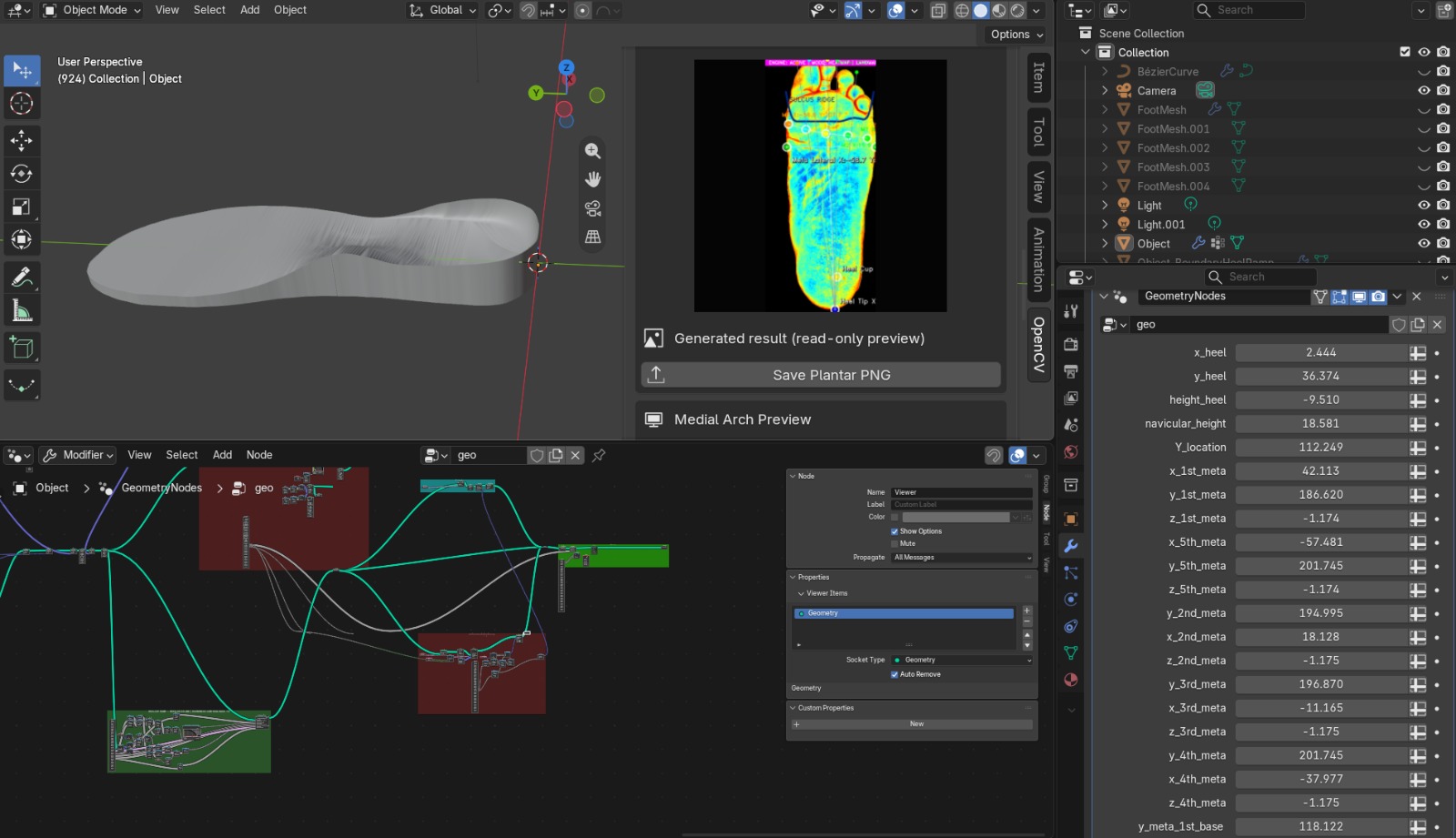
A functional UI on Blender has been prepared where the plantar foot image is imported to calculate the distance and depth of different landmarks using various OpenCV libraries. The parameters can also be manually altered within the Blender file, which includes geometry nodes connected together to account for deformations and their positions adjustable via a simple slider.
Figure 1: Screenshot of the Blender file used for generation of the custom insole.
In parallel, an Android application is under development for image capture and deployment of weighted ML models. The application has not yet been connected to the full workflow, as it requires further processing and refinement. Statistical methods for performance evaluation of the available depth-estimation ML models are being investigated to determine the exact sample size and data structure requirements.
To finalize the best possible depth estimation and landmark estimation models, data acquisition is currently underway, comprising foot images and corresponding 3D scans of each subject’s foot. In parallel, the legal documentation and consent requirements for data collection are being finalized.
While an apparatus for foot image capture has already been developed, a more convenient approach; a platform allowing the subject to walk under a normal gait and step directly onto the capture surface; is currently under development.