Limb-Cycle: AI-Enabled Affordable Prosthetic Sockets from Recycled Plastic Waste
Funded by Royal Academy of Engineering, UK
(December 2025- December 2026)
Limb-Cycle is a Royal Academy of Engineering-funded project led by Kathmandu University to develop affordable, custom-fit prosthetic sockets for people in Nepal and other low-resource settings. The project combines AI-assisted socket design with 3D printing and locally recycled polypropylene waste. Working with academic, clinical, software, and manufacturing partners, the team will develop and test socket-design software, recycled filament, and prosthetic prototypes. The project aims to reduce production costs, minimize plastic waste, and strengthen local capacity in inclusive assistive-technology innovation.
Project Objectives
AI-assisted software prototype for prosthetic-socket design using recycled polypropylene, reducing manual fabrication dependence while improving fit, comfort, and usability
Material and mechanical validation of recycled polypropylene sockets to ensure structural and clinical viability, paired with cost reduction and circular-economy practices through material reuse
Clinical and user-centered evaluation, local capacity building, and inclusive innovation to improve accessibility and production efficiency in prosthetic care
Description
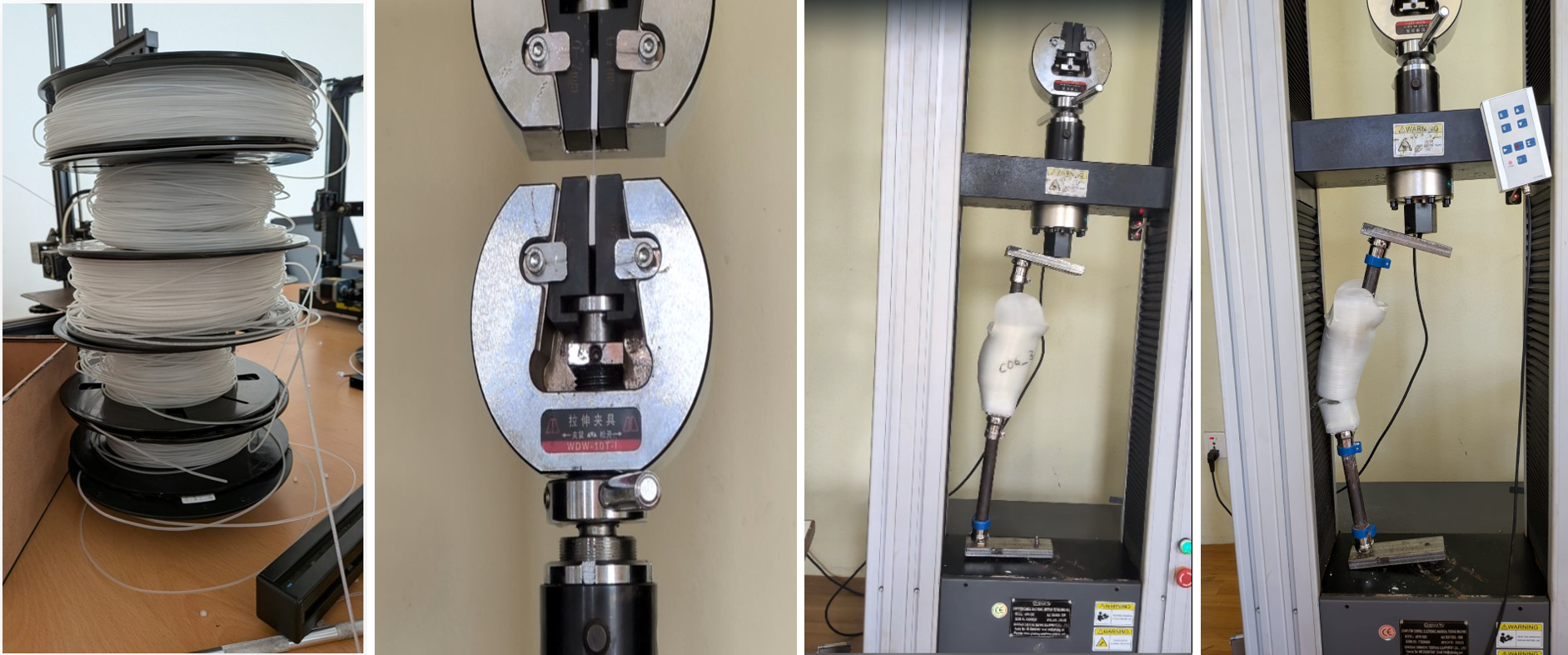
Since December 2025, the Limb-Cycle team has built an integrated digital workflow for producing affordable, patient-specific prosthetic sockets-combining AI-assisted socket design software, 3D scanning, and 3D printing with filament made from recycled polypropylene waste. Early prototypes have been fitted and tested with patients, structural sockets have passed proof-strength testing up to 4,480 N, and the team continues refining filament quality and the AI design workflow toward broader clinical validation.
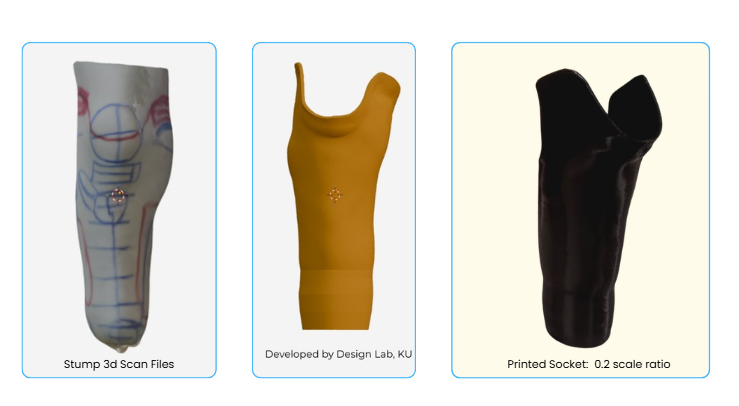
Figure 1: Workflow, from 3d scan to digital design to final 3d print model.
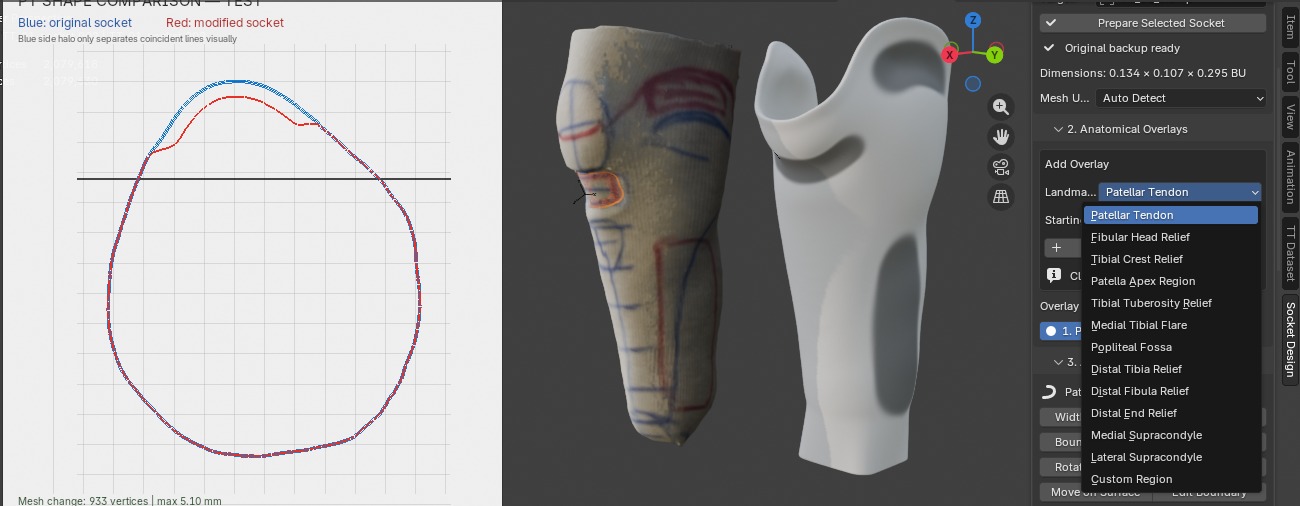
Application Interface
Figure 2: Socket-design software interface
Figure 3: Filament produced and Testing Machine Carrying out Test for Socket Endurance
Project Team
Dr. Pratisthit Lal Shrestha, Principal Investigator
Dr Yogeshvaran Ramanathapuram Nagarajan, Co-Applicant
Dr. Surendra Sujakhu , Collaborator and Material-Science Advisor
Mr. Amit Ratna Bajracharya, Collaborating Prosthetist