
AI Solution for Humanitarian Challenges
Funded by University College London (UCL) Consultants Ltd
(2024-2025)
This project explores the transformative role of artificial intelligence (AI) in humanitarian response systems. The research combines a comprehensive literature review to map existing AI applications with Key Informant Interviews (KII) with local stakeholders in Nepal. The goal is to identify current challenges and technological gaps, ensuring that proposed solutions are context-sensitive and ethically sound. The project aims to contribute to the development of effective, scalable AI strategies that can improve humanitarian outcomes in low resource settings by informing AI-driven scenarios, strengthening the capacity of humanitarian organizations, and fostering global collaborations.
Conclusion
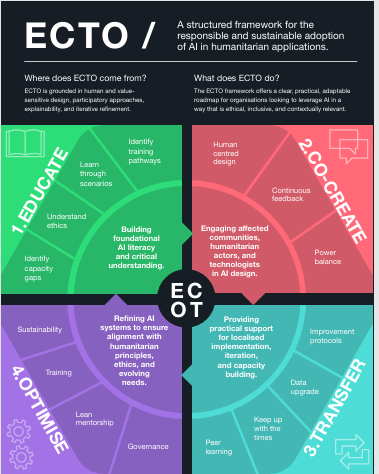
The ECTO framework—Educate, Co-Create, Transfer, and Optimise—provides a practical approach for using AI ethically in humanitarian work. It helps staff understand AI risks, involves local communities in decision-making, builds local capacity, and supports continuous improvement. Together, these pillars encourage transparency, accountability, and responsible use of sensitive data. Ultimately, ECTO aims to ensure AI strengthens humanitarian efforts while protecting the dignity, rights, and interests of affected communities.